Dubai in 2026: Facts, Figures & What Makes It Unique
Dubai is one of those cities that defies easy description. It is, simultaneously, a global financial centre, a medical tourism hub, a trade show capital, and home to the most internationally diverse population on earth. For anyone arriving in Dubai — whether for business, healthcare, or a new life — understanding what this city actually is makes the experience considerably easier to navigate.
Here is what the numbers say about Dubai right now.
A City That Belongs to the World
Dubai’s most striking demographic fact is one that surprises almost every first-time visitor: Emiratis — UAE nationals — make up less than 8% of Dubai’s population.
The city’s 3.95 million residents (2025 figure) are overwhelmingly expatriates — people from India, Pakistan, Bangladesh, the Philippines, Iran, Egypt, the UK, Russia, China, and over 190 other countries. The largest nationality groups by share:
- Indians: 37.96%
- Pakistanis: 16.72%
- Bangladeshis: 7.38%
- Filipinos: 6.89%
- Iranians: 4.72%
What this means in practice is that Dubai is not a city where one foreign culture dominates. It is genuinely multilingual, genuinely multicultural — and the city’s systems, from healthcare to business registration to legal courts, are designed with this reality in mind.
The official language is Arabic. The working language of business, hospitality, and healthcare is English. And the language of daily life across Dubai’s neighbourhoods spans Hindi, Urdu, Tagalog, Bengali, Persian, Russian, Mandarin, and dozens more.
Dubai’s Tourism Figures Are at an All-Time High
In 2025, Dubai welcomed 19.59 million international visitors — the third consecutive record-breaking year for the emirate’s tourism sector. January 2026 alone brought 1.99 million arrivals.
Where are visitors coming from?
- Western Europe: 18.2% of January 2026 arrivals
- CIS & Eastern Europe (including Russia and Ukraine): 16.3%
- Gulf Cooperation Council countries: 16.2%
- South Asia: 14.4%
Dubai International Airport handled 95.2 million passengers in 2025, making it one of the busiest international airports in the world by passenger volume. Hotel room occupancy is at record levels, with the average daily rate in January 2026 reaching $211.
For a translation and interpretation agency operating in this environment, the implications are straightforward: at any given moment, millions of people in Dubai are navigating the city in a language that is not widely spoken around them.
The Economy: Strong and Growing
Dubai’s GDP reached AED 232 billion in Q1 2026 alone, reflecting 2.4% growth year-on-year. The broader economy is projected to grow at 4.5% through 2026, driven by trade, tourism, financial services, and real estate.
Tourism now contributes approximately 11–12% of Dubai’s GDP. The target for 2026 is 20 million visitors — a milestone that would put Dubai in a category shared by only a handful of cities globally.
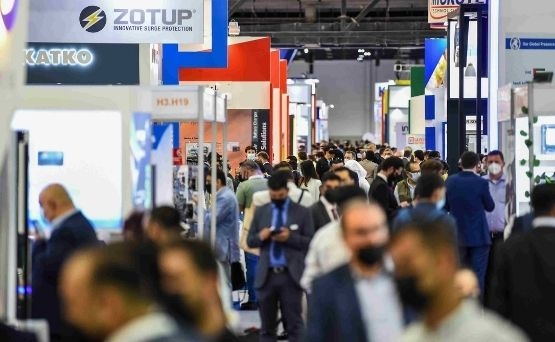
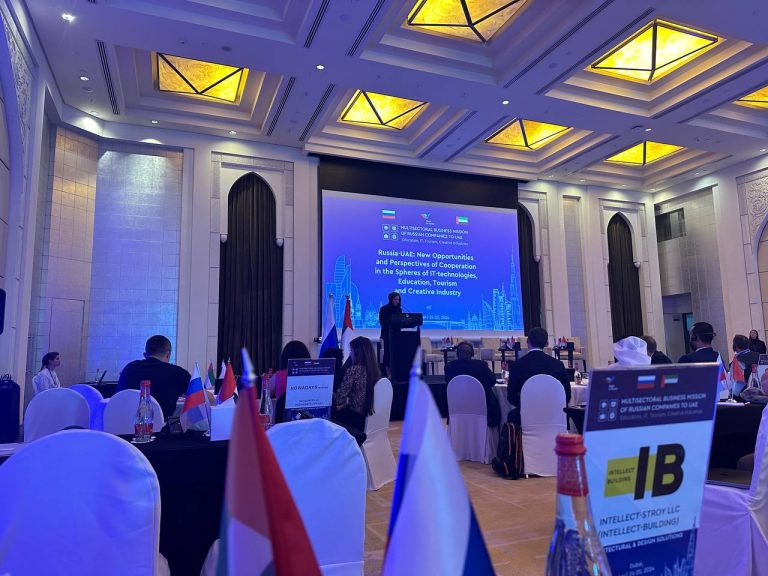
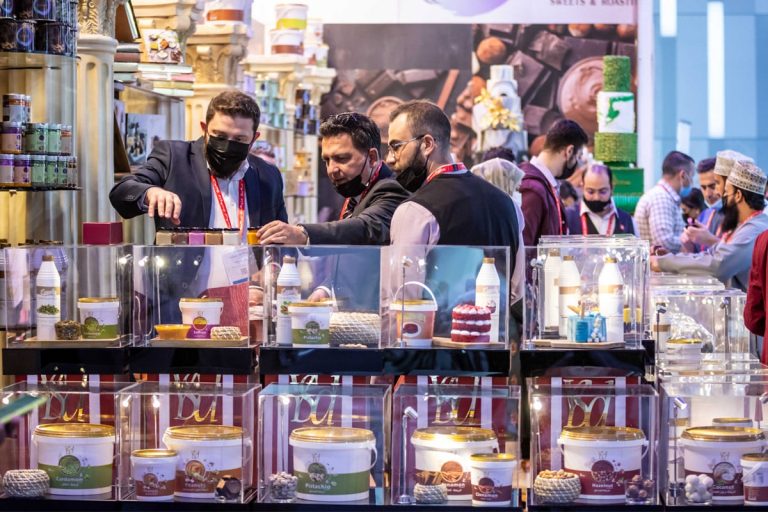
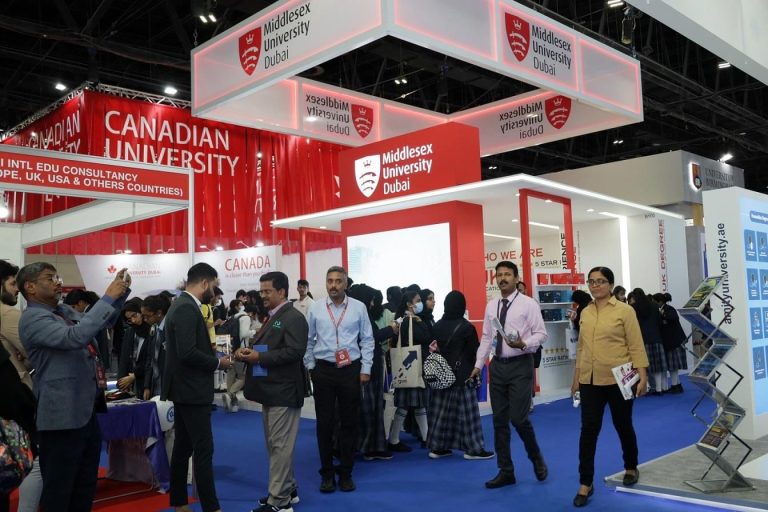
The trade show and exhibition sector is a major pillar of this economy. Events like Gulfood, GITEX Global, Arab Health, Big 5 Global, and Cityscape draw hundreds of thousands of international delegates each year — delegates who conduct meetings, negotiations, and presentations in their own languages.
Dubai as a Healthcare Destination
Dubai’s healthcare infrastructure has expanded significantly over the past decade. The Dubai Health Authority (DHA) oversees a network of public and private hospitals that now regularly attract patients from across the region and beyond — particularly from Russia, Eastern Europe, Central Asia, and the Arab world.
International patients come to Dubai for:
- Cosmetic and aesthetic procedures — one of Dubai’s highest-volume medical tourism categories
- Orthopaedic surgery — joint replacements, spinal procedures
- Cardiology and cardiac surgery
- Oncology and cancer treatment
- Dentistry and oral surgery
- Dermatology and skin treatments
The challenge for these patients is that consultations, consent processes, discharge instructions, and follow-up care all take place in Arabic or English — often neither of which the patient speaks fluently. A Russian-speaking patient navigating a surgical consultation, or a Mandarin-speaking visitor preparing for an aesthetic procedure, needs professional language support. Not a bilingual friend. A trained medical interpreter.
What 200+ Nationalities Actually Means Day-to-Day
Dubai’s government has made it a point of pride that over 200 nationalities live and work in the emirate. This shapes how the city actually functions.
Court proceedings require certified translations of legal documents. Embassy visits require interpreters for nationalities whose languages are not widely spoken locally. Business meetings between European investors and Emirati or South Asian partners require precise, professional interpretation. Medical appointments, where miscommunication carries real risk, require trained medical interpreters.
GLB Translations has worked across all of these settings since 2016 — over 1,000 medical visits, 75+ embassy appointments, and 2,000+ trade fair and exhibition assignments, across 50+ languages. The diversity of Dubai is not a background fact for us; it is the reason we exist.
Five Things About Dubai That Still Surprise People
1. There is no income tax. Dubai levies no personal income tax, which is a primary driver of expatriate migration from Europe and North America. A 9% corporate tax was introduced in 2023, but individuals pay nothing on earnings.
2. The weekend is Saturday and Sunday — but not everywhere. Government entities observe Friday–Saturday as the weekend (changed in January 2022). Private sector companies often align with Saturday–Sunday. First-time visitors to government offices on a Sunday are regularly caught off guard.
3. Dubai is not the capital of the UAE. Abu Dhabi is. Dubai is the most populous and internationally visible emirate, but Abu Dhabi — roughly 140 kilometres away — is the federal capital and seat of government.
4. The tallest building in the world is here. The Burj Khalifa stands at 828 metres and has held the title of world’s tallest structure since 2010. It remains a working tower with offices, residences, a hotel, and the world’s highest observation deck.
5. Over 40% of the world’s population lives within a four-hour flight of Dubai. This geographical reality — sitting at the intersection of Europe, Asia, and Africa — is precisely why Dubai has become the global hub it is: for trade, for travel, for medical tourism, and for international business.
Planning a Visit to Dubai? Language Doesn’t Have to Be a Barrier.
Whether you are coming to Dubai for a medical appointment, a business conference, a trade show, or a new chapter of your life, GLB Translations is here to make sure nothing gets lost in translation.
We cover 50+ languages. We reply in under 5 minutes on WhatsApp. And with over a decade of experience working across Dubai’s hospitals, embassies, exhibition halls, and boardrooms, we know this city as well as anyone.
GLB Translations is a certified interpretation and translation agency operating across Dubai, Abu Dhabi, Barcelona, and Bangkok. Statistics in this article are sourced from the Dubai Department of Economy and Tourism, Dubai Media Office, and publicly available demographic research (2025–2026).